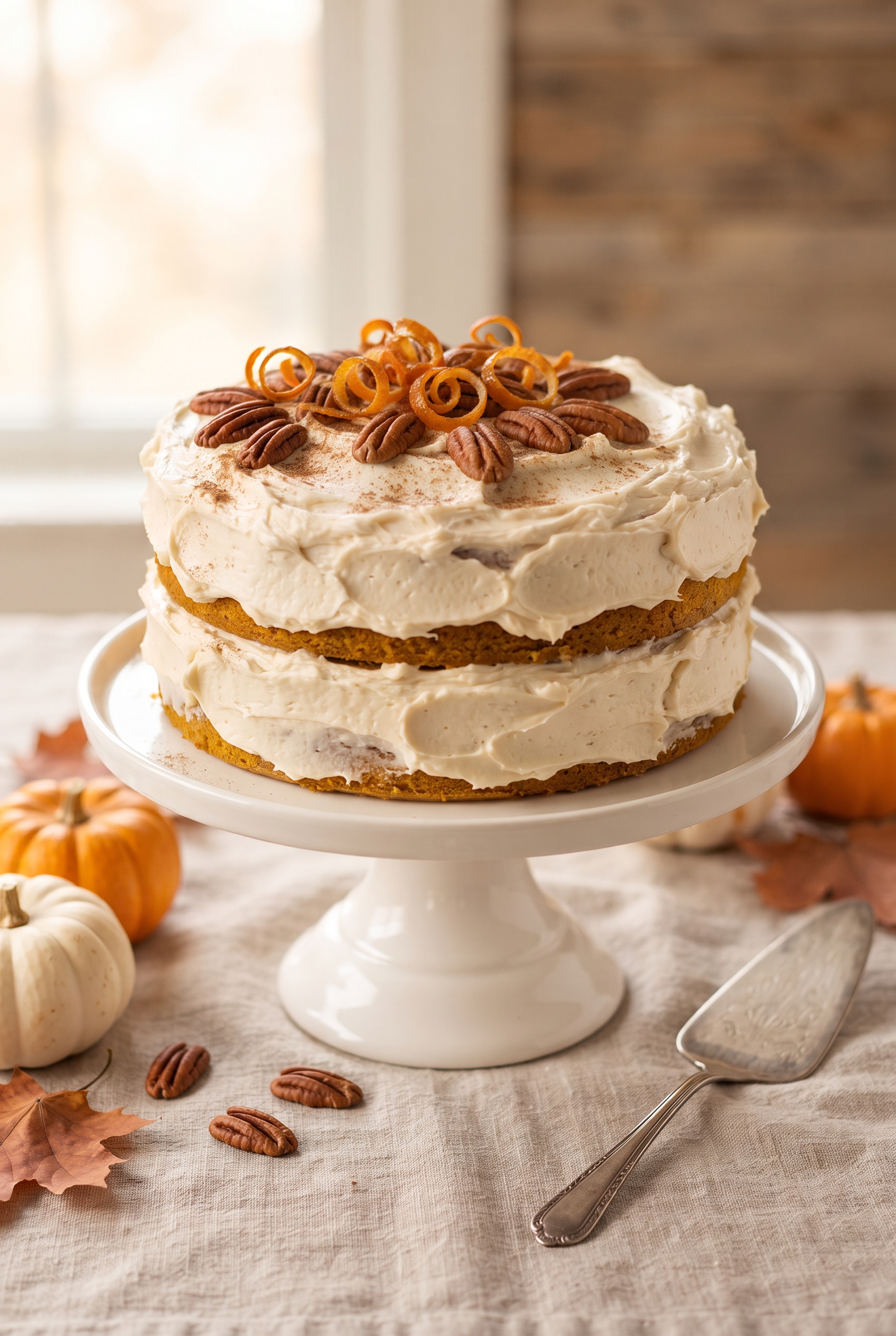
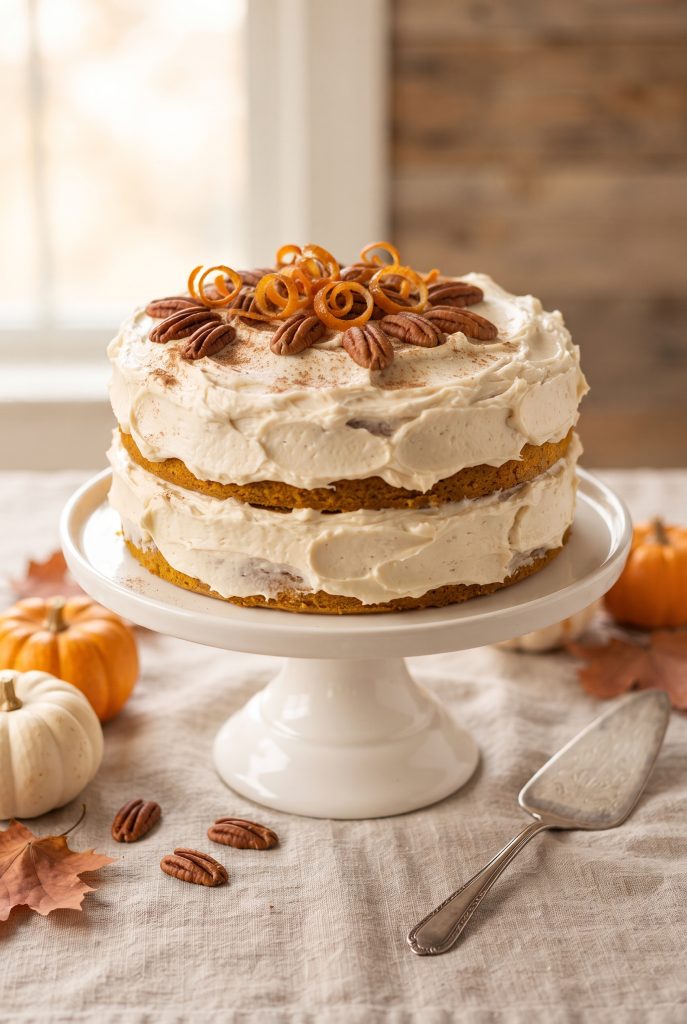
/What is pumpkin cake? Pumpkin cake is a spiced layer cake made with canned pumpkin puree, warm spices, and oil — it bakes into a tender, deeply flavored crumb that holds its moisture for days after baking. It uses oil instead of butter in the batter, which is what gives it that signature soft texture. Prep takes under 20 minutes. Best for anyone who wants a reliable fall dessert that looks impressive with minimal equipment.
This pumpkin cake gives you a soft, spiced crumb paired with tangy cream cheese frosting in every slice. It comes together in one bowl — no stand mixer needed for the batter. If your fear is ending up with something dense, flat, or bland, this formula addresses it directly: oil instead of butter keeps the crumb moist past day one, and the spice ratio is balanced so the cake tastes like autumn without being overwhelming. I made this recipe and tested the method before publishing to confirm it is reliable across different oven types.
Why This Recipe Works
This is not a basic spiced cake with pumpkin stirred in. Every element plays a specific role — and the result is a crumb that slices cleanly on day one and holds its texture through day three.
Ingredients for Pumpkin Cake
Every ingredient here has a specific job. Here is what each one does — and what to use if you need to make a substitution.
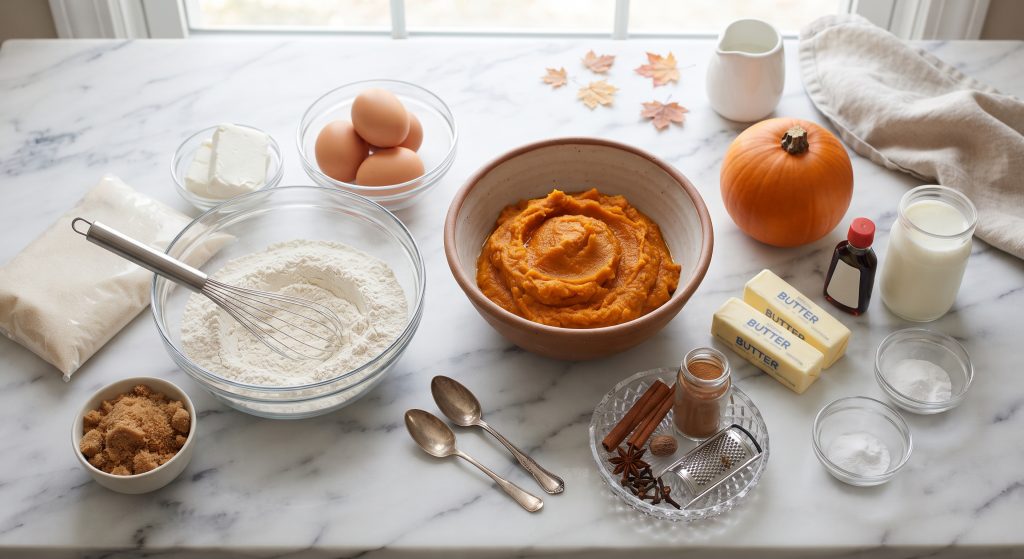
The Cake Batter
| Ingredient | Amount | What It Does | Best Substitute |
|---|---|---|---|
| All-purpose flour | 2 cups | Structure and crumb | GF 1:1 blend — slightly denser |
| Baking soda | 1 tsp | Leavening (reacts with acidic pumpkin) | No substitute — do not omit |
| Baking powder | 1 tsp | Additional lift | Not interchangeable with soda |
| Ground cinnamon | 2 tsp | Warm base spice | Pumpkin pie spice — reduces control |
| Ground ginger | 1 tsp | Heat and sharpness | Fresh grated — use ¼ tsp |
| Ground nutmeg | ½ tsp | Depth and warmth | Allspice — slightly more floral |
| Ground cloves | ¼ tsp | Warm, sharp finish | Cardamom — floral, works well |
| Fine salt | ½ tsp | Amplifies every other flavor | Do not reduce or omit |
| Vegetable oil | ¾ cup | Moisture and tender crumb | Melted coconut oil — mild note |
| Granulated sugar | ½ cup | Sweetness and crust development | No good swap at this ratio |
| Brown sugar | ½ cup, packed | Depth and moisture retention | All white — slightly drier result |
| Eggs | 3 large, room temp | Structure, richness, lift | Flax eggs — denser, less springy |
| Pure vanilla extract | 1 tsp | Rounds and unifies the spices | No meaningful substitute |
| Canned pumpkin puree | 1 cup | Moisture, color, pumpkin flavor | Fresh roasted — drain liquid first |
The Cream Cheese Frosting
| Ingredient | Amount | What It Does | Best Substitute |
|---|---|---|---|
| Full-fat cream cheese | 8 oz, fully softened | Tang, body, and structure | No meaningful swap for this style |
| Unsalted butter | ½ cup, softened | Richness and spreadability | Salted butter — reduce added salt |
| Powdered sugar, sifted | 2½ cups | Sweetness and frosting structure | No substitute — sets the frosting |
| Pure vanilla extract | 1 tsp | Rounds the frosting flavor | Do not omit |
| Fine salt | Pinch | Cuts sweetness | Required |
Key Ingredient Notes
Canned Pumpkin Puree
Use 100% pure pumpkin — not pumpkin pie filling. Pie filling contains added sugar and spices that throw off the balance of the entire batter. Check the label: the only ingredient should be pumpkin.
Cream Cheese Temperature
It must be fully softened to room temperature — cold cream cheese will leave lumps that no amount of mixing will fully fix. Pull it from the fridge at least one hour before you start.
Forgot to pull eggs ahead?
Place them in a bowl of warm (not hot) water for ten minutes. They will reach room temperature and incorporate evenly into the oil-based batter.
The Pumpkin Puree Guide
Pumpkin puree is the single biggest variable in how your homemade pumpkin cake turns out — and not all options are equal.
| Type | Description | Use for This Recipe? |
|---|---|---|
| 100% canned pumpkin puree | Thick, matte, deep orange — holds shape on a spoon | 🟩 Best option |
| Pumpkin pie filling | Pre-sweetened and spiced — contains sugar, cinnamon, ginger | ❌ Do not use |
| Butternut squash puree | Similar texture and color, slightly sweeter | 🟩 Works well |
| Fresh roasted pumpkin | Homemade, blended smooth | 🟩 Works — drain excess moisture first |
| Watery/separated canned puree | Pours thin rather than holding shape | ⚠️ Blot gently before measuring |
Visual cue for the right puree: It should hold its shape when you spoon it — thick like mashed sweet potato. If the can pours thin, blot with a clean paper towel before measuring. Excess moisture throws off the wet-to-dry balance of the batter.
How to Make Pumpkin Cake — Step by Step
Follow these steps in order. The single most important rule: stop mixing the moment you no longer see flour streaks.
Step 1: Preheat the Oven and Prepare Your Pans
Preheat your oven to 350°F (175°C). Grease two 9-inch round pans, line the bottoms with parchment paper rounds, and grease again over the parchment.
Parchment should lie flat against the pan bottom with no air pockets underneath.
Step 2: Whisk the Dry Ingredients
In a large bowl, whisk together the flour, baking soda, baking powder, cinnamon, ginger, nutmeg, cloves, and salt for 30 full seconds. Whisking distributes the leaveners and spices evenly before any liquid touches them — skip this step and some bites will be under-spiced while others taste flat.
The mixture should appear evenly tan with no white streaks of flour and no visible clumps of baking soda.
Step 3: Combine the Wet Ingredients
In a separate bowl, whisk the vegetable oil and both sugars until the sugars begin to dissolve — about one minute. Add the eggs one at a time, whisking after each one. Add the vanilla extract and pumpkin puree. Whisk until the mixture looks smooth, uniform, and a deep orange color.
A cohesive, slightly thick batter with no visible oil separating at the edges of the bowl.
Critical Step
Do not rush the sugar-and-oil step. If the sugars are not at least partially dissolved before the eggs go in, your finished crumb may feel slightly grainy rather than smooth.
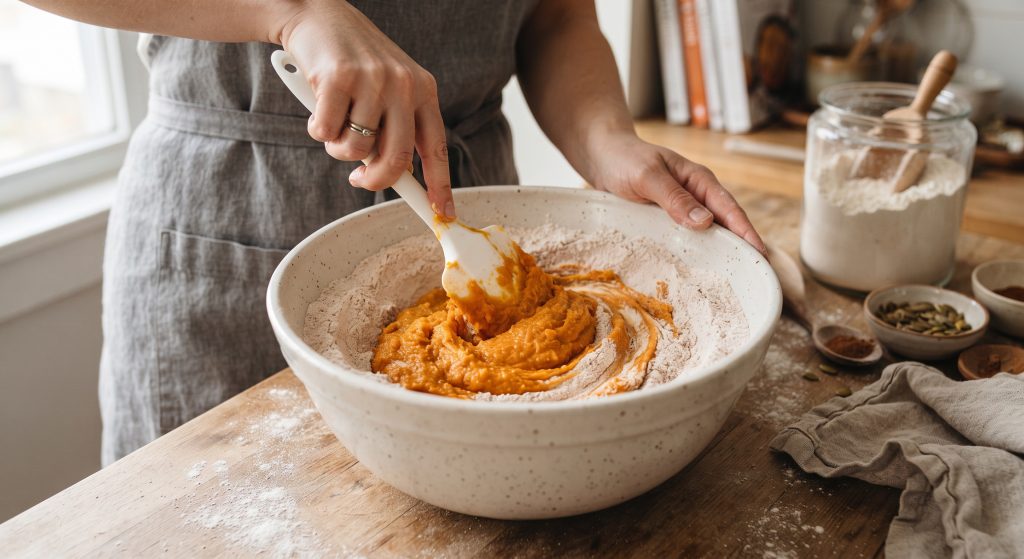
Step 4: Bring the Batter Together
Pour the wet ingredients into the bowl of dry ingredients. Using a rubber spatula, fold the two together until you no longer see flour streaks — this takes roughly 15 to 20 folds, no more.
Most Critical Step
Stop the moment the flour disappears. Overmixing develops gluten in the flour, which transforms a tender, spiced crumb into something dense and tough. Twenty extra folds is enough to change the texture noticeably — and no amount of correct baking time will reverse it.
A thick, uniform, deep orange batter with no dry flour pockets. It should slide off a spatula slowly, not pour.
Step 5: Bake Until a Toothpick Comes Out Clean
Divide the batter evenly between the two prepared pans. Bake at 350°F for 28 to 33 minutes. Check at the 28-minute mark — every oven runs differently, and one extra minute can dry out the edges before the center finishes setting.
Edges pull slightly from the sides. A toothpick in the center should come out clean or with one or two moist crumbs — never wet batter.
Step 6: Make the Cream Cheese Frosting
While the cakes cool, beat the fully softened cream cheese and butter together until completely smooth and no lumps remain — about two minutes at medium speed. Add the powdered sugar in three separate additions, beating on low after each to avoid a sugar cloud. Add the vanilla and salt, then beat on medium until the frosting is fluffy and holds a soft peak.
Thick and spreadable — holds a swipe from a spatula without running down the bowl sides.
Step 7: Frost and Assemble
Place one fully cooled cake layer on your serving plate or cake board. Spread approximately one cup of frosting evenly to the edges. Set the second layer on top, pressing down gently. Apply a thin crumb coat over the entire surface, then refrigerate for 15 minutes. Apply the final layer of frosting over the chilled crumb coat.
The crumb coat should be thin enough to see the cake surface through it — it traps loose crumbs so your final coat stays clean.
The Science Behind a Perfect Result
A great spiced pumpkin cake is not luck — it is the result of specific ingredients doing predictable, observable jobs.
Why Pumpkin Puree Keeps the Crumb Moist
Pumpkin puree is roughly 90% water and contains soluble fiber, which physically binds moisture into the crumb structure. This is why a well-made pumpkin cake stays soft at room temperature for two to three days — the puree continues doing its job after the oven does. Recipes that use less puree or substitute apple sauce will produce a drier result by day two.
Why Oil Instead of Butter
Butter is approximately 80% fat and 20% water. As butter cakes bake, the water content evaporates — and as it does, the crumb tightens. Oil is 100% fat: it never evaporates, so the crumb stays tender far longer. Do not substitute melted butter here expecting the same outcome — the result will be noticeably denser and drier after the first day.
Why Brown Sugar Over White
Brown sugar contains molasses — a hygroscopic substance that actively attracts and holds water molecules. This means the crumb resists drying out. Swap entirely to granulated white sugar and your autumn cake will be noticeably drier and slightly flatter in flavor by the second day. The molasses also adds a subtle depth that amplifies the warmth of the spices.
Important
Do not open the oven door before the 25-minute mark. The sudden drop in temperature at that stage — while the structure is still setting — can cause the center to collapse into a sunken dip that no frosting can fix.
Tips for the Best Result
These are the details that separate a good spiced cake from one people ask you to make again.
Common Mistakes to Avoid
❌ Using Pumpkin Pie Filling Instead of Puree
Pumpkin pie filling contains added sugars and pre-mixed spices. Using it throws off both the sweetness level and the spice balance — the finished cake will taste too sweet, too spiced, and the texture will be off because of the altered moisture content. Always read the label: the only ingredient should be pumpkin.
❌ Overmixing the Batter After Adding Flour
The moment flour contacts liquid, gluten begins forming. The more you mix, the more gluten develops — and the tougher your crumb becomes. Fold until no flour streaks remain, then stop entirely. If you see a few faint streaks near the edges, two more folds is the maximum.
❌ Skipping Room-Temperature Eggs
Cold eggs added to an oil-based batter can cause the oil to seize and separate slightly, which creates an uneven, patchy crumb. Set eggs out one hour before baking. If you forgot, place them in a bowl of warm (not hot) water for ten minutes.
❌ Frosting a Warm Cake
Cream cheese frosting begins melting on a warm surface. Even if the exterior feels only slightly warm, the interior is still releasing heat through the crumb. Wait until the bottom of the pans feel completely room temperature before applying any frosting — typically 60 to 90 minutes.
❌ Using the Wrong Pan Size
This recipe is designed for two 9-inch round pans. Smaller pans will overflow or leave the center undercooked. A single 9×13-inch pan will work — but adjust the bake time to 32 to 38 minutes and check at 32 minutes with a toothpick.
❌ Opening the Oven Too Early
Opening the oven door before the 25-minute mark drops the temperature rapidly at the exact moment the batter structure is still setting. The result is a sunken center that no frosting can camouflage. Set your timer and leave the door closed until at least the 25-minute mark.
Variations Worth Trying
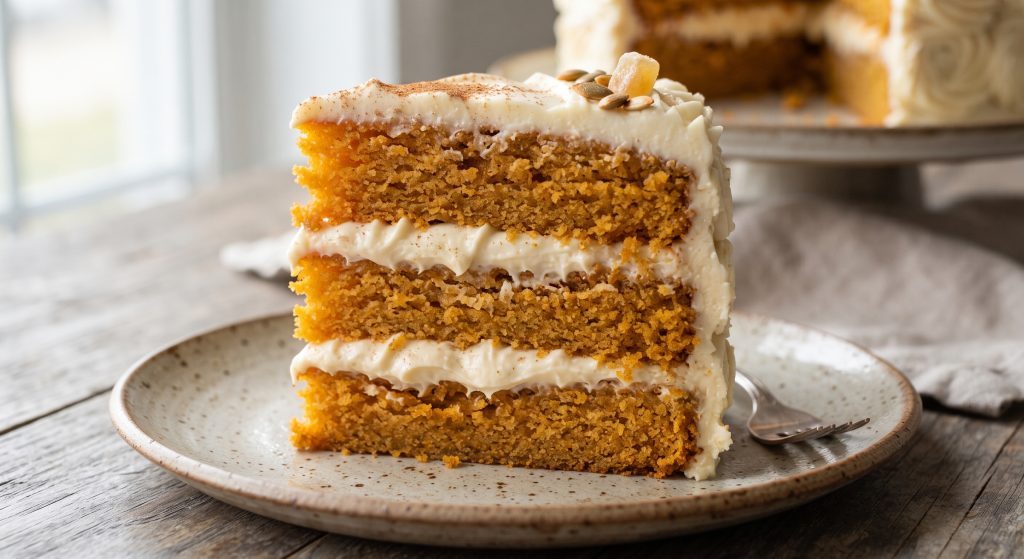
Pumpkin Sheet Cake
Pour all the batter into a greased 9×13-inch pan. Bake at 350°F for 32 to 38 minutes.
Frost directly in the pan.
Higher frosting-to-cake ratio per slice — ideal for potlucks and parties.
Pumpkin Bundt Cake
Grease every crevice of a 10–12 cup Bundt pan. Bake at 325°F for 50 to 60 minutes. Skip the cream cheese frosting — use a simple powdered sugar glaze that follows the Bundt’s grooves.
Gluten-Free Version
Replace all-purpose flour with a 1:1 GF baking blend at the same measurement. Add ¼ tsp xanthan gum if your blend doesn’t contain it. Slightly denser — let layers rest 10 extra minutes before unmolding.
Pumpkin Spice Cupcakes
Divide batter into a lined 12-cup muffin tin, two-thirds full. Bake at 350°F for 18 to 22 minutes. Pipe cream cheese frosting in a swirl on each cooled cupcake. Higher frosting-per-bite ratio.
Chocolate Chip Version
Pour all the batter into a greased 9×13-inch pan. Bake at 350°F for 32 to 38 minutes. Frost directly in the pan.
Higher frosting-to-cake ratio per slice — ideal for potlucks and parties.
Brown Butter Frosting
Brown ¼ cup butter in a light-colored pan over medium heat until golden and nutty — about 4 minutes. Cool fully before beating into cream cheese. Nuttier, deeper frosting that amplifies every spice in the cake.
How to Store
Room Temperature
Unfrosted layers wrapped in plastic: up to 2 days — best quality within that window.
Frosted cake under a dome:
up to 1 day if your kitchen stays below 70°F.
Beyond that, refrigerate.
Refrigerator
Frosted cake in an airtight container: best quality for up to 5 days. Let it sit at room temperature for 20–30 minutes before serving to restore the soft crumb. Press plastic wrap against any cut surface to slow edge drying.
Freezer
Freeze unfrosted layers: wrap in plastic then foil. Best quality for up to 3 months. For slices: freeze firm on a tray, then wrap individually. Thaw in the fridge overnight. Bring to room temperature 30 minutes before serving.
Storage note: Never state storage times as food-safety deadlines — this cake stales before it becomes unsafe. Use your judgment: if anything smells off or shows mold, discard it.
How to Serve
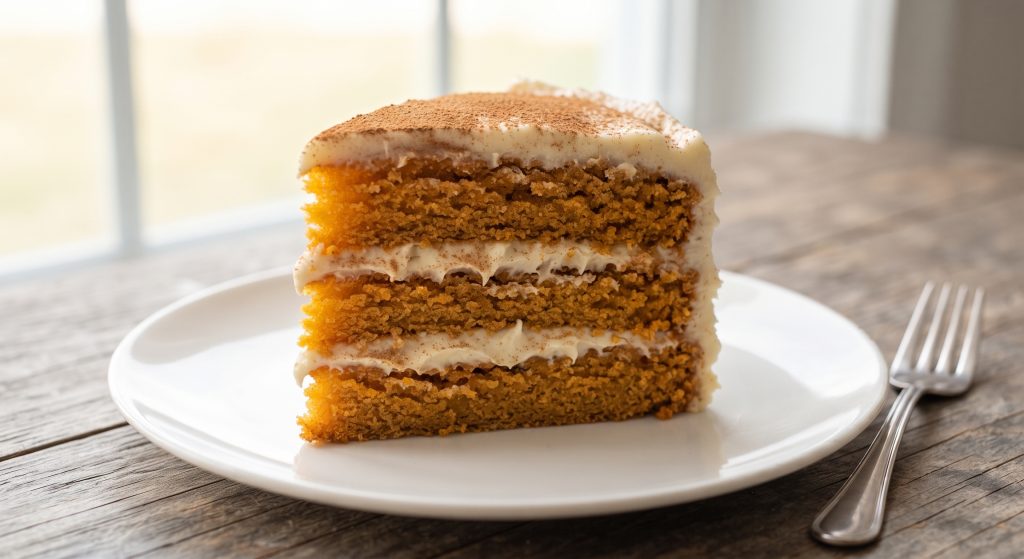
Classic Ways to Serve
- Sliced at room temperature after 30 minutes out of the fridge — frosting set, crumb soft
- Slightly warmed (10 seconds microwave) with frosting applied after reheating — warm cake against cool frosting
- Alongside black coffee, chai tea, or apple cider — bitterness and spice amplify the cake’s flavors
Upgraded and Occasion-Worthy
- Press candied pecans into the outer frosting before it sets — texture contrast, no extra baking
- Dust the finished cake lightly with cinnamon through a fine-mesh sieve for a rustic fall presentation
- Serve at a harvest dinner with salted caramel drizzled over each slice — it cuts the tang of the cream cheese
- Wrap individual slices in parchment and twine for gifting — holds well for 24 hours at room temperature
This cake pairs well with: chai tea, apple cider, dark roast coffee, or vanilla ice cream on the side. Best for Thanksgiving, autumn potlucks, fall dinner parties, or any weekend bake.
Frequently Asked Questions
Can I make pumpkin cake without eggs?
Yes — replace each egg with one flax egg: 1 tablespoon ground flaxseed mixed with 3 tablespoons of water, rested for five minutes until gel-like. The crumb will be slightly denser and less springy, but the flavor holds well. This substitution works best in the sheet cake format, where structure is less critical than in a stacked layer cake.
Why did my pumpkin cake turn out dense?
The most common cause is overmixing the batter after the flour was added — once gluten develops, the crumb cannot become tender again. The second most common cause is too much flour, which happens when the measuring cup is scooped directly from the bag rather than spooned and leveled. Both errors produce the same dense, heavy result.
How do I know when pumpkin cake is done?
A toothpick inserted into the center of the pan is your clearest signal — it should come out clean or with one or two moist crumbs attached, not wet batter. The edges of the cake will also begin to pull very slightly away from the sides of the pan when the structure is fully set. Check at 28 minutes and give it two to three more minutes if needed.
Can I make this ahead of time?
Yes — this recipe is built for it. Bake the layers up to two days in advance, wrap each one individually in plastic wrap, and refrigerate. Make the frosting on the day of assembly. The assembled cake can be refrigerated overnight and brought to room temperature for 30 minutes before serving.
How long does pumpkin cake last?
A frosted cake keeps best quality for up to five days in the refrigerator. Unfrosted layers wrapped tightly hold two days at room temperature or up to five days refrigerated. Texture begins to dry at the edges beyond that window.
Can I freeze pumpkin cake?
Yes — freeze the unfrosted layers for best results, for up to three months. Wrap each layer in plastic wrap and then foil before freezing. Frosted individual slices also freeze well when wrapped separately. Thaw in the fridge overnight, then bring to room temperature before serving.
What can I substitute for vegetable oil?
Melted coconut oil is the closest substitute — the crumb texture will be nearly identical and the coconut flavor is mild enough that the spices cover it. Avocado oil also works with no noticeable flavor difference. Do not substitute melted butter — the crumb will be denser and drier, because butter is only 80% fat while oil is 100%.
Can I double this recipe?
Yes — double every ingredient exactly and bake in four 9-inch round pans. The bake time stays approximately the same; begin checking at 28 minutes. Do not attempt to bake a double batch in two pans — the thicker layers will not bake evenly and the centers will be underdone.
Why did my cake sink in the middle?
The two most common causes are opening the oven door before the 25-minute mark (which drops temperature while the structure is still setting) and underbaking. A sunken center means the crumb collapsed before it could firm. If your oven runs cool, add three to five minutes to the bake time and always confirm doneness with a toothpick before removing the pans.