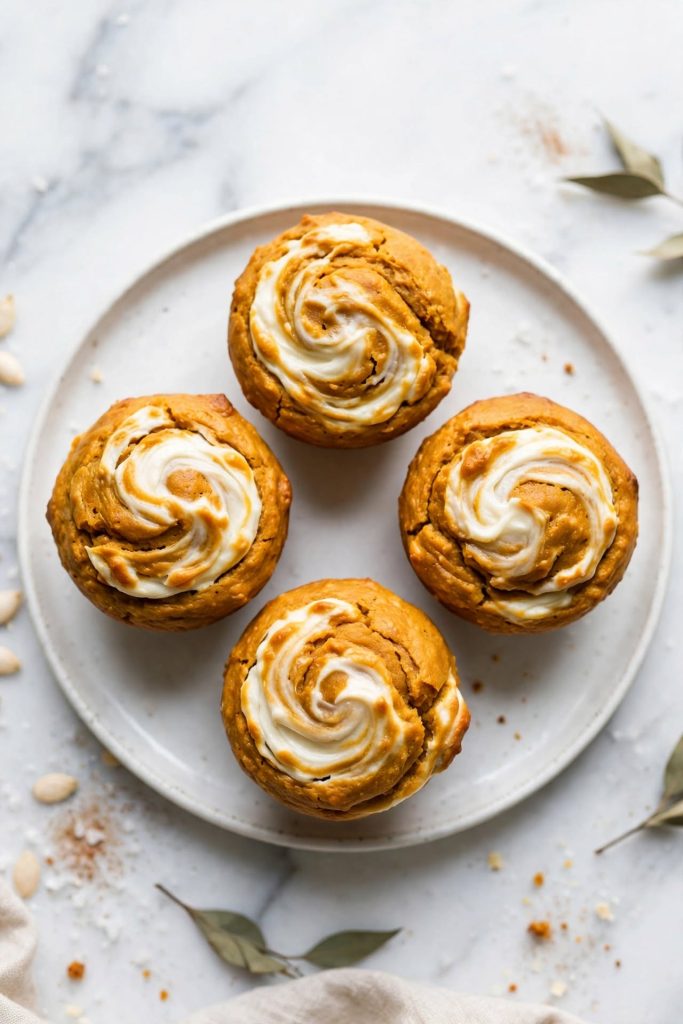
Pumpkin cream cheese muffins are warmly spiced pumpkin muffins with a tangy cream cheese filling baked into the center. They use canned pumpkin purée, pumpkin pie spice, and a two-ingredient cream cheese layer that firms up smooth and sliceable in the oven. Prep takes about 20 minutes and total bake time is 20 to 22 minutes. Best for home bakers who want a reliable, make-ahead fall recipe that looks bakery-worthy without special equipment.
These pumpkin cream cheese muffins deliver a warmly spiced pumpkin crumb with a tangy, firm cream cheese center — baked together in one standard muffin tin. They come together with one bowl of batter, one bowl of filling, and no specialty tools. If your biggest concern is the cream cheese sinking into the batter or the muffins turning out dense and dry, this method addresses both problems directly. The layering technique keeps the filling suspended, and the oil-based batter stays moist even after two days at room temperature. I tested this recipe multiple times to nail the filling ratio and bake time before publishing — the proportions here work consistently.
Why This Recipe Works
These are not the flat, dense pumpkin muffins that taste mostly of cinnamon and not much else. Every decision here is there for a reason — and the results show in the texture, moisture, and appearance of the finished muffin.
- Oil instead of butter — oil keeps these moist for up to two days at room temperature. Butter gives a richer flavor but makes the crumb tighten as it cools; oil does not.
- Full-fat canned pumpkin purée — adds moisture, structure, and natural sweetness without making the batter heavy or greasy.
- Brown sugar — its molasses content adds depth and holds moisture far better than white sugar. Muffins made with white sugar only taste noticeably drier by the next day.
- A two-ingredient cream cheese filling — just cream cheese and powdered sugar. It sets firm during baking so you get a clean, tangy center rather than a pool of liquid.
- Layering, not swirling — placing the filling between two layers of batter keeps it suspended in the center as the muffin rises — the cream cheese stays where you put it.
- No mixer for the batter — folding by hand means you stop mixing at exactly the right moment, which is the single biggest factor in keeping the crumb tender.
- Make-ahead friendly — these taste best the day after baking when the spices have deepened and the texture has settled.
If you are looking for more fall baking ideas, [your seasonal baking guide] is a good place to start. IL-1 → replace with your internal link
Ingredients for Pumpkin Cream Cheese Muffins
Every ingredient here has a specific job. Here is what each one does — and what to use if you need to make a substitution.
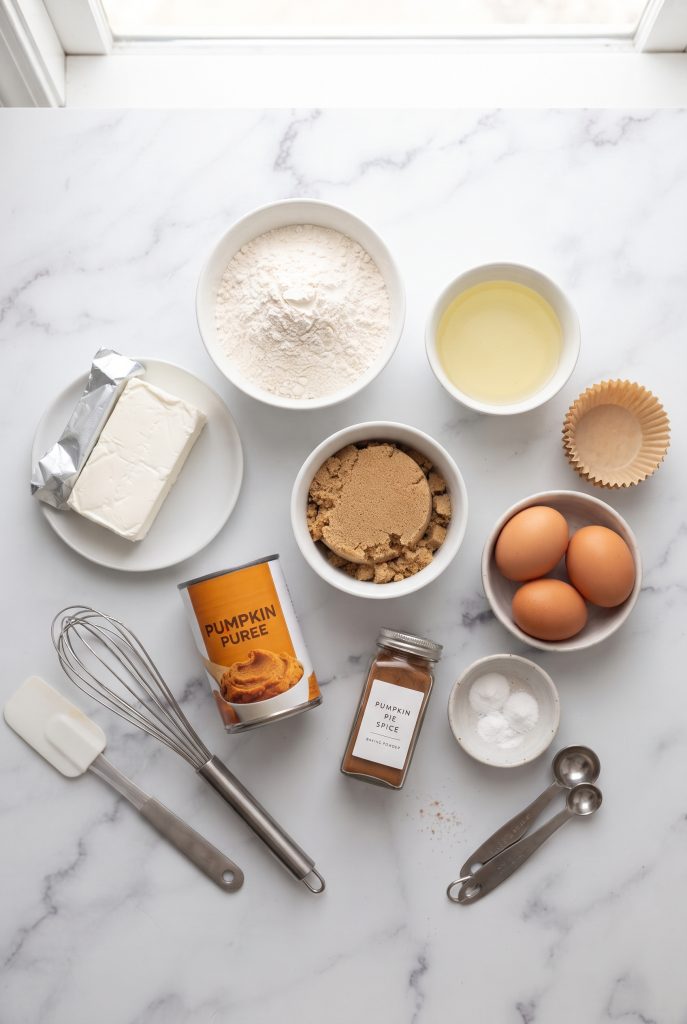
The Muffin Batter
| Ingredient | Amount | What It Does | Best Substitute + Impact |
|---|---|---|---|
| All-purpose flour | 1¾ cups | Structure and crumb | 1:1 gluten-free flour blend — slightly denser crumb |
| Brown sugar (packed) | ¾ cup | Sweetness + moisture retention | White sugar — will be drier by day two |
| Baking powder | 1 tsp | Primary lift | No direct substitute — do not swap for baking soda alone |
| Baking soda | ½ tsp | Browning + additional lift | Do not omit |
| Pumpkin pie spice | 2 tsp | Warm spice base | 1 tsp cinnamon + ½ tsp ginger + ¼ tsp nutmeg + ¼ tsp cloves |
| Salt | ½ tsp | Balances sweetness, sharpens spice | No substitute |
| Canned pumpkin purée | 1 cup | Moisture, structure, color | Butternut squash purée — slightly sweeter, paler |
| Vegetable oil | ½ cup | Moisture, tender crumb | Melted coconut oil or light olive oil — minor flavor difference |
| Eggs (large) | 2 | Binding and lift | Flax eggs — slightly denser, less rise |
| Vanilla extract | 1 tsp | Depth and roundness | No substitute needed at this quantity |
The Cream Cheese Filling
| Ingredient | Amount | What It Does | Best Substitute + Impact |
|---|---|---|---|
| Full-fat brick cream cheese (softened) | 6 oz | Tangy, firm center | Neufchâtel — less rich, slightly softer after baking |
| Powdered sugar | 3 tbsp | Sweetens + stabilizes the filling | Granulated sugar — grainier texture |
| Vanilla extract | ½ tsp | Rounds the tang of the dairy | Can be omitted without major impact |
Key Ingredient Notes
Cream cheese: Use brick-style, full-fat cream cheese — not the spreadable kind sold in tubs. Spreadable cream cheese has a higher water content and does not set the same way in the oven. It can make your filling loose and wet rather than creamy and defined — and it is more likely to sink into the batter during baking.
Pumpkin purée: Use 100% pumpkin purée — not pumpkin pie filling. Pumpkin pie filling is pre-sweetened and spiced. If you use it by mistake, your muffins will be too sweet and the spice balance will be unrecognizable from what this recipe intends.
Eggs: Room-temperature eggs blend into the batter more evenly than cold ones. A smooth, evenly mixed batter rises more consistently — cold eggs can create a slightly streaky, uneven rise.
Equipment You Need
- Standard 12-cup muffin tin
- Paper liners (strongly recommended — cream cheese filling makes greasing alone unreliable)
- Two medium mixing bowls
- Hand mixer or stand mixer (for the filling only)
- Whisk and rubber spatula
- ½ tablespoon cookie scoop or two spoons (for layering)
The Pumpkin Purée Guide
Pumpkin purée is the single biggest variable in how your fall muffin recipe turns out. The wrong choice changes the moisture level, color, and flavor of the finished muffin. Here is every option you might reach for:
| Purée Type | Description | Use for This Recipe? |
|---|---|---|
| 100% canned pumpkin purée | Smooth, unsweetened, consistent moisture level | ✅ Best — use this |
| Pumpkin pie filling (canned) | Pre-sweetened, pre-spiced, thinner consistency | ❌ No — flavor and texture will be off |
| Fresh pumpkin (roasted + blended) | Variable moisture, deeper earthy flavor | ⚠️ Works — but drain on paper towels first |
| Butternut squash purée | Similar texture, slightly sweeter, paler color | ✅ Works as a direct substitute |
| Kabocha squash purée | Denser, earthier flavor, darker color | ✅ Works — slightly drier than pumpkin |
If you are using fresh pumpkin: roast a sugar pumpkin at 400°F until a fork slides in easily (typically 45 to 60 minutes), scoop out the flesh, and blend until completely smooth. Drain the purée through a paper-towel-lined sieve for at least 30 minutes — fresh pumpkin holds significantly more water than canned and your batter will be too thin if you skip this step.
How to Make Pumpkin Cream Cheese Muffins — Step by Step
Work through these steps in order. The cream cheese filling is made first so it can firm up slightly while you mix the batter — this makes it easier to handle when layering.
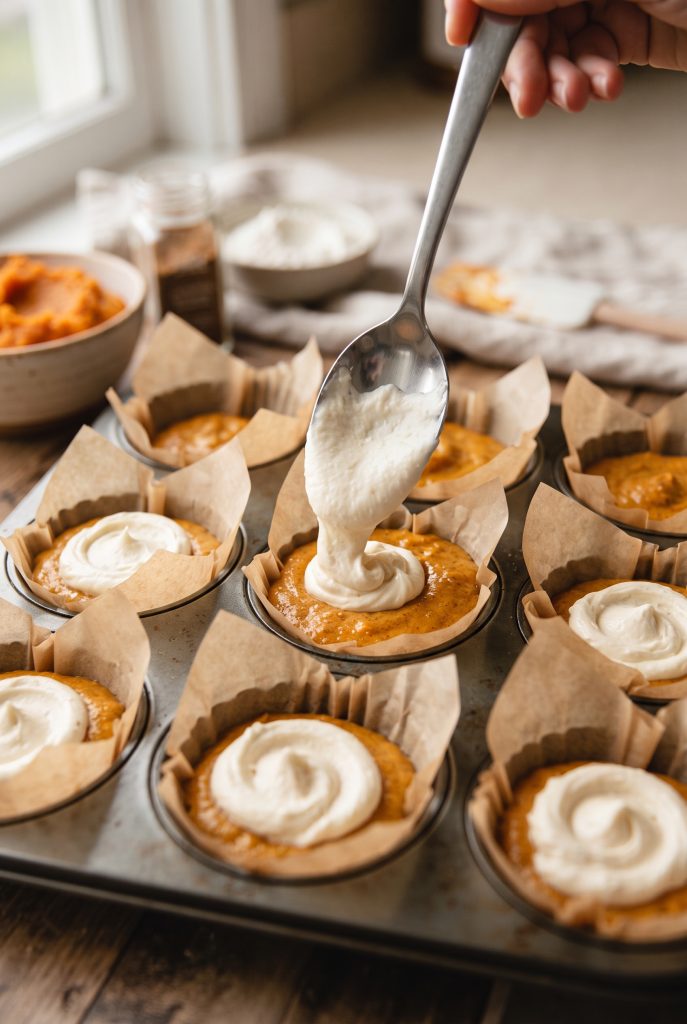
Step 1: Preheat the Oven and Prepare Your Pan
Preheat your oven to 375°F (190°C). Line a 12-cup muffin tin with paper liners — do not skip this. The cream cheese filling can seep into the pan edges during baking; liners give you a clean release and even baking on all sides. What to look for: every cup lined before you start mixing anything.
Step 2: Make the Cream Cheese Filling
In a small bowl, beat the softened cream cheese, powdered sugar, and vanilla with a hand mixer on medium speed until completely smooth — about 60 seconds. The mixture should look like thick frosting with no lumps. Set it aside. What to look for: no white lumps remaining. If you see lumps, your cream cheese was too cold — keep beating.
⚠️ This is where most filling problems start. Cold cream cheese will not beat smooth no matter how long you run the mixer. Take it out of the refrigerator at least 30 minutes before you begin.
Step 3: Mix the Dry Ingredients
In a large mixing bowl, whisk together the flour, brown sugar, baking powder, baking soda, pumpkin pie spice, and salt. Break up any brown sugar clumps with your whisk — undissolved clumps can create pockets of concentrated sweetness in the finished muffin. What to look for: an evenly colored, fully combined dry mixture with no visible lumps.
Step 4: Combine the Wet Ingredients
Add the pumpkin purée, vegetable oil, eggs, and vanilla extract to the dry mixture. Fold everything together with a rubber spatula using slow, deliberate strokes — stop the moment you no longer see flour streaks. The batter will be thick and deeply orange. What to look for: a uniform color with no white flour pockets. Once you are comfortable with this folding method, [your guide on quick bread technique] is worth reading next. IL-2 → replace with your internal link
⚠️ Do not switch to a hand mixer here. Overmixing develops the gluten in your flour — this transforms the tender crumb you are going for into something dense and tough. Ten extra stirs after the flour disappears is enough to noticeably change the texture.
Step 5: Fill the Muffin Cups
Spoon a layer of batter into each lined cup — about 1 heaping tablespoon, just enough to cover the bottom. Add a rounded teaspoon of cream cheese filling on top of each batter layer, centered as much as possible. Spoon the remaining batter over the filling to cover it completely. Each cup should be about two-thirds full. What to look for: the cream cheese filling should be fully enclosed on all sides by batter before the tin goes into the oven.
Step 6: Bake and Cool
Bake at 375°F for 20 to 22 minutes. Start checking at the 20-minute mark — insert a toothpick into the pumpkin crumb portion (not the filling center) and look for it to come out clean or with a few moist crumbs. The tops will be domed and spring back when you press them lightly. Transfer the muffins to a wire rack after 5 minutes in the pan. What to look for: tops that look set and matte — not shiny or wet in the center.
The Science Behind the Perfect Muffin
Understanding what each component does gives you the tools to troubleshoot on the fly — and the confidence to make changes without the recipe falling apart.
Why Pumpkin Purée Keeps Muffins Moist
Pumpkin purée is roughly 90% water by weight, and that water is bound inside plant fiber. It releases slowly during baking, which keeps the crumb from drying out the way a butter-only batter would. The result is a moist pumpkin muffin that stays noticeably softer the next day compared to muffins that rely solely on oil or butter for moisture. The plant fiber also adds a small amount of structure, which is part of why the batter holds the cream cheese filling in place rather than letting it sink.
Why Warm Spices Work Together
Pumpkin pie spice is a blend of cinnamon, ginger, nutmeg, and cloves — each one amplifies a different aspect of pumpkin’s earthy, naturally sweet flavor profile. Cinnamon provides warmth. Ginger adds a sharp, aromatic edge. Nutmeg brings subtle richness. Cloves deepen the overall flavor without dominating. Using all four in the right proportion (which the pre-blended spice handles for you) creates a more rounded, layered spice note than cinnamon alone ever can.
Why the Cream Cheese Filling Sets Cleanly
Cream cheese is a high-protein, high-fat dairy product. When beaten with a small amount of powdered sugar and exposed to oven heat, the proteins set — the filling firms into a smooth, defined layer rather than staying soft and spreadable. The powdered sugar is not just for sweetness: it slightly lowers the temperature at which the filling sets, giving it time to spread evenly before firming. That is why the proportion matters. Too much sugar and the filling stays loose and can run into the crumb; too little and it can become slightly grainy as it bakes.
Tips for the Best Result
These tips address the specific variables that make the biggest difference in the finished muffin — not general baking advice, but issues specific to this recipe.
Use Full-Fat Cream Cheese — Not Spreadable
Brick-style cream cheese has a lower water content than the spreadable kind sold in tubs. When the filling bakes, lower water content means the proteins set more firmly and the center stays defined. If you use spreadable cream cheese, the filling can become watery and thin rather than creamy and smooth — and it is far more likely to sink and disperse into the surrounding batter before the muffin structure can set around it.
Do Not Overfill the Muffin Cups
Two-thirds full is the correct level. These muffins dome as they bake — if the cups are too full, the batter overflows before the dome can form and you get flat, spread-out tops instead of the tall, rounded shape that holds the filling in place. Overfilling also increases the risk of the cream cheese center being pushed to the side rather than staying centered.
Room-Temperature Ingredients Matter
Cold eggs and cold cream cheese both cause problems in this recipe. Cold eggs do not emulsify evenly into an oil-based batter — you can end up with a slightly separated, uneven batter that bakes inconsistently. Cold cream cheese will not beat smooth at all. Set both out on the counter for at least 30 minutes before you start mixing. This single step prevents the two most common texture complaints with cream cheese stuffed muffins.
⚠️ Do Not Open the Oven in the First 15 Minutes
Opening the oven door causes a sudden temperature drop. For muffins, that drop can cause the dome to collapse before the batter structure has set — you will get flat-topped muffins with a dense, gummy center. Set your timer and leave the oven completely closed until the 20-minute mark. This is especially important for cream cheese stuffed muffins, where the filling creates a weight in the center that the batter needs time to rise around.
Test With a Toothpick — Here Is What to Look For
Insert a toothpick into the pumpkin crumb — not directly into the cream cheese center, which will always come out wet regardless of doneness. A clean toothpick, or one with just a few moist crumbs attached, means the muffin is done. A toothpick with wet, orange batter clinging to it means they need 2 to 3 more minutes. Check at the 20-minute mark and go from there in 2-minute increments.
Common Mistakes to Avoid
These are the five mistakes that show up most often — and each one has a specific, fixable cause.
❌ Using Pumpkin Pie Filling Instead of Pumpkin Purée
These look nearly identical on the shelf but are completely different products. Pumpkin pie filling is pre-sweetened and already heavily spiced — using it makes the muffins cloyingly sweet and gives the spice profile an unrecognizable, muddled flavor. Check the label before opening the can: “100% pure pumpkin” with a very short ingredient list is what you need.
❌ Overmixing the Batter After the Flour Goes In
Once flour meets wet ingredients, gluten development starts with every additional stir. Overmixing turns a tender, open crumb into a dense, chewy texture that no amount of extra baking time or added moisture will fix. Fold with a spatula — do not stir — and stop the moment the flour streaks disappear. The batter should look a little rough at the edges; that is exactly right.
❌ Starting With Cold Cream Cheese
Cold cream cheese will not beat smooth no matter how long you run the mixer — you will see and feel the resistance immediately. What you end up with is a lumpy filling that does not distribute evenly in the muffin cup and does not smooth out during baking. The lumps become visible in the finished muffin and the filling texture feels grainy rather than creamy. Pull the cream cheese from the refrigerator at least 30 minutes — ideally 45 minutes — before you begin.
❌ ⚠️ Pulling Them Out Too Early
Pumpkin muffins look done before they are. The deep orange color of the batter masks the visual cues you would normally use to judge doneness — raw pumpkin batter and fully baked pumpkin crumb look very similar from above. Always use the toothpick test, insert it into the crumb (not the filling), and give it the full 20 minutes minimum before checking. For more guides like this one, [your baking troubleshooting guide] covers everything in the same detail. IL-3 → replace with your internal link
❌ Skipping the Pan Liners
Cream cheese filling can ooze to the edges of the muffin cup during baking. Without liners, it sticks directly to the pan surface and makes clean release nearly impossible — you will tear the muffin trying to remove it. Liners also help the muffin hold its shape during the first few minutes in the oven when the batter is still fluid enough to spread.
Variations Worth Trying
Each of these uses the same base batter and filling — you are just making one adjustment at a specific stage.
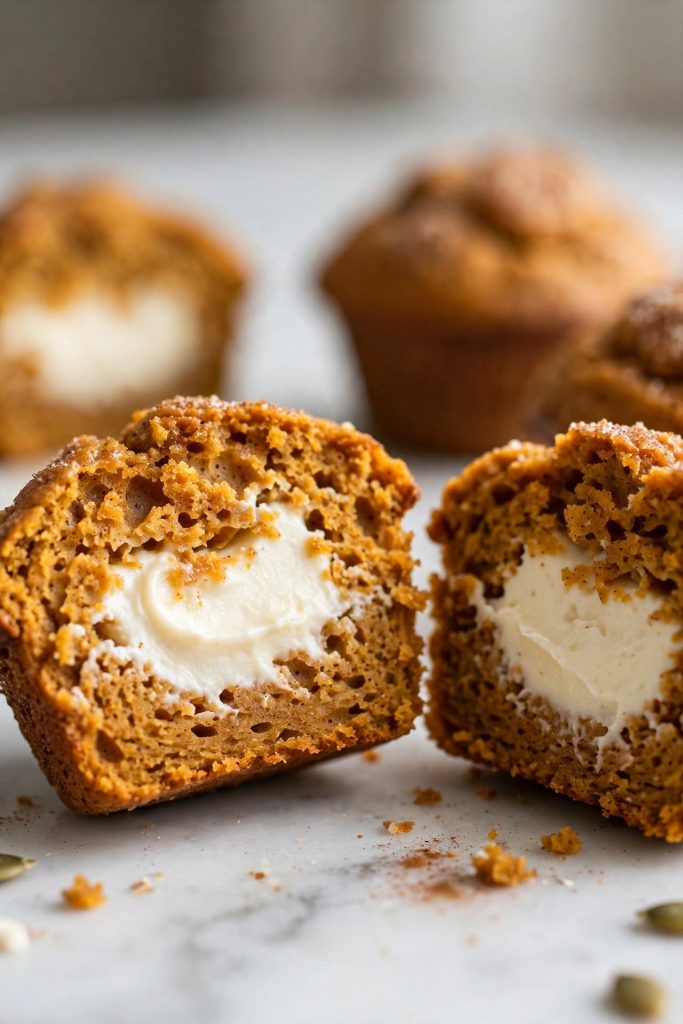
Gluten-Free Version
What changes: Replace all-purpose flour with a 1:1 gluten-free baking flour blend (Bob’s Red Mill or King Arthur both work well). When: swap at the measuring stage before mixing. Result: the same moist crumb and set filling with no noticeable texture difference, provided the batter is not overmixed. Gluten-free blends are more sensitive to overmixing than all-purpose flour.
Brown Butter Pumpkin Version
What changes: Replace the vegetable oil with an equal amount of browned butter — melt butter over medium heat, swirl constantly until the milk solids turn golden and the aroma smells nutty, then cool to room temperature before using. When: prepare before mixing the batter. Result: a toasted, caramel-like depth layered underneath the pumpkin spice — an elevated version that works well for holiday tables or special breakfasts.
Chocolate Chip Addition
What changes: Fold ½ cup dark or semi-sweet chocolate chips into the batter just before filling the cups. When: after the batter is fully mixed, as the last step. Result: the bittersweet chocolate cuts through the warm autumn spice and makes these feel closer to a dessert muffin than a breakfast one. Mini chips distribute more evenly if you want chocolate in every bite.
Mini Muffin Format
What changes: Use a 24-cup mini muffin tin. Reduce the cream cheese filling to a rounded ¼ teaspoon per cup. Reduce bake time to 12 to 14 minutes. When: adjust at the filling and baking stages. Result: bite-sized versions that are well suited to parties, school lunches, and bake-sale boxes — each one holds a small but visible cream cheese center.
Streusel-Topped Occasion Version
What changes: Mix 3 tbsp all-purpose flour, 3 tbsp brown sugar, ½ tsp cinnamon, and 2 tbsp cold butter together with your fingers until a crumbly topping forms. Sprinkle evenly over each filled cup before baking. When: add just before the tin goes into the oven. Result: a crunchy, caramelized top that adds textural contrast to the soft crumb below and makes these look bakery-finished — a strong choice for holiday brunches and gift boxes.
How to Store
Because the filling contains dairy, storage for these muffins is slightly different from a standard muffin with no perishable filling.
Room Temperature
These muffins are best eaten within 24 hours if stored at room temperature because of the cream cheese filling. If you plan to eat them the day they are baked, store loosely covered on the counter — not airtight, which traps steam and makes the tops sticky and wet. This is a quality window, not a food-safety deadline, but refrigerating is the more practical choice for anything kept past the first day.
Refrigerator
Store in an airtight container in the refrigerator for best quality for up to 4 days. Place a folded paper towel in the container to absorb condensation — this keeps the surface of each muffin from becoming tacky overnight. Cold muffins firm up noticeably; warm them in the microwave for 15 to 20 seconds before eating to restore the soft crumb and slightly loosen the cream cheese center back to its original texture.
Freezer — Complete Guide
These freeze well. For individual servings: let the muffins cool completely, wrap each one individually in plastic wrap, then place them all in a zip-top freezer bag. Press out as much air as possible before sealing. For a full batch: wrap the entire batch tightly in plastic wrap, then in a layer of aluminum foil. Freeze for best quality for up to 2 months — they are safe beyond this window but the texture declines as moisture migrates in the freezer. To thaw: move to the refrigerator overnight, or thaw at room temperature for 2 to 3 hours. The pumpkin crumb holds up well to freezing; the cream cheese filling stays creamy and smooth after thawing. If batch baking is something you enjoy, [your freezer baking guide] fits perfectly into that routine. IL-4 → replace with your internal link
How to Serve
These muffins work across a range of occasions — from a weekday breakfast to a holiday brunch platter.
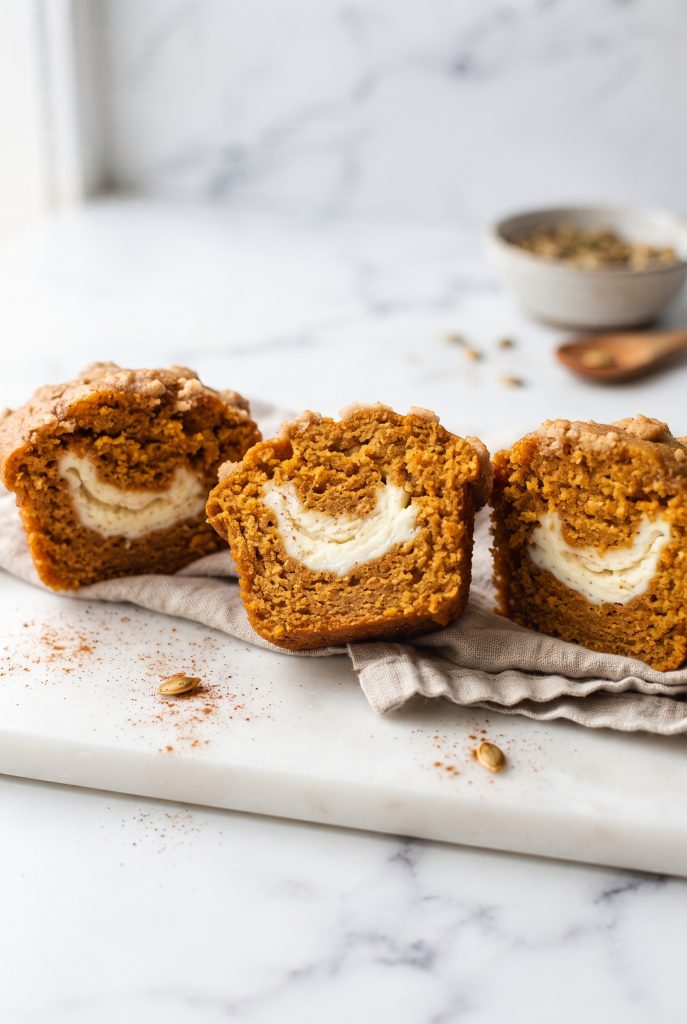
Classic Ways to Serve
- Warm from the oven with a cup of black coffee or chai tea — the spice in the muffin mirrors the spice in the drink
- Sliced in half with a thin spread of softened salted butter on each side
- At room temperature straight from the refrigerator, warmed for 15 seconds first
Upgraded and Occasion-Worthy
- With a drizzle of maple glaze (1 tbsp maple syrup + ½ cup powdered sugar + 1 tsp milk, whisked smooth) poured over cooled muffins for a holiday brunch platter
- Arranged on a board alongside spiced pecans and dried cranberries for a fall gathering — the colors and textures work well together
- Wrapped individually in parchment and tied with twine for a hostess gift or bake-sale contribution
Frequently Asked Questions
These are the questions that come up most often — answered directly, with everything you need in each response.
Can I make pumpkin cream cheese muffins without eggs?
Yes — replace each egg with a flax egg (1 tablespoon ground flaxseed mixed with 3 tablespoons water, rested for 5 minutes until gel-like). The texture will be slightly denser and the muffins will rise a little less, but the crumb stays moist because of the pumpkin purée. The cream cheese filling is not affected by this substitution.
Why did my muffins sink in the middle?
Sinking usually means the muffins were underbaked or the oven was opened too early. The center collapses when the batter has not had enough time to set around the cream cheese filling — the filling is heavier than the surrounding batter, so it pulls the crumb down before it can firm up. Make sure your oven is at the correct temperature (an oven thermometer removes the guesswork), do not open the door in the first 15 minutes, and always use the toothpick test before removing them from the oven.
How do I know when pumpkin cream cheese muffins are done?
Insert a toothpick into the pumpkin crumb portion — not the cream cheese center — and look for a clean toothpick or one with a few moist crumbs attached. The tops should spring back when pressed lightly in the center and look matte and set rather than shiny or wet. A shiny, sunken center usually means the batter underneath is still wet and needs more time.
Can I make these ahead of time?
Yes — these muffins taste better the morning after baking. The spices deepen overnight and the crumb firms up slightly into a texture that slices more cleanly. Bake them the evening before, cool completely, store in an airtight container in the refrigerator, and warm for 15 to 20 seconds in the microwave before serving.
How long do pumpkin cream cheese muffins last?
At best quality for up to 4 days in the refrigerator in an airtight container. Because the filling is a dairy product, refrigerating after the first day is the safer approach. Use your judgment — if anything smells off or shows visible mold, discard it. Frozen muffins stay at best quality for up to 2 months.
Can I freeze pumpkin cream cheese muffins?
Yes. Wrap each cooled muffin individually in plastic wrap and freeze for best quality for up to 2 months. Thaw overnight in the refrigerator, or at room temperature for 2 to 3 hours. The cream cheese filling holds up well after freezing and returns to a creamy, smooth texture once thawed. Warm briefly in the microwave if you prefer them soft.
What can I substitute for cream cheese?
Neufchâtel cheese works as the closest substitute — lower fat content but similar baking behavior. The filling will be slightly less rich and may be a touch softer after baking. Mascarpone is another option and gives a richer, less tangy filling with a creamier texture. Avoid ricotta — it is too wet and does not set firmly the same way that brick cream cheese does.
Can I double this recipe?
Yes — double every ingredient and bake in two 12-cup muffin tins. Rotate the tins halfway through baking if your oven has uneven heat from front to back. Bake time stays the same at 20 to 22 minutes, but test both tins independently with the toothpick method since oven performance can vary by rack position. If you enjoyed this recipe, [your pumpkin spice loaf recipe] is the next one worth making. IL-5 → replace with your internal link
Why did my cream cheese filling disappear into the batter?
This happens for one of two reasons: the filling was too soft (cream cheese not fully beaten, or left out too long and over-softened), or the bottom batter layer was too thin to support the filling’s weight. Make sure the filling holds a firm rounded shape on a spoon before you use it — it should not droop or spread. Use a full heaping tablespoon of batter as the base layer, and spoon rather than pour the filling onto it.
What size muffin tin should I use?
A standard 12-cup muffin tin with ½-cup cups is right for this recipe — it gives you 12 muffins filled to about two-thirds. A jumbo tin gives you 6 muffins with more room for filling; increase bake time to 25 to 28 minutes. A mini tin gives you approximately 24 muffins; reduce bake time to 12 to 14 minutes and use only a rounded ¼ teaspoon of filling per cup.
Can I use fresh pumpkin instead of canned?
Yes, with one extra preparation step. Roast a sugar pumpkin at 400°F until a fork slides in easily, scoop out the flesh, and blend until completely smooth. Drain through a paper-towel-lined sieve for at least 30 minutes — fresh pumpkin holds significantly more water than canned pumpkin purée and your batter will be too wet and loose if you skip draining. The flavor is slightly deeper and earthier than canned.
Can I add nuts or other mix-ins?
Yes — fold in up to ½ cup of chopped pecans, walnuts, or chocolate chips just before filling the cups. Both nuts and chocolate chips add textural contrast to the soft crumb. Toast nuts first for a more pronounced flavor: spread on a dry pan over medium heat for 3 to 5 minutes until fragrant, then cool completely before adding to the batter.
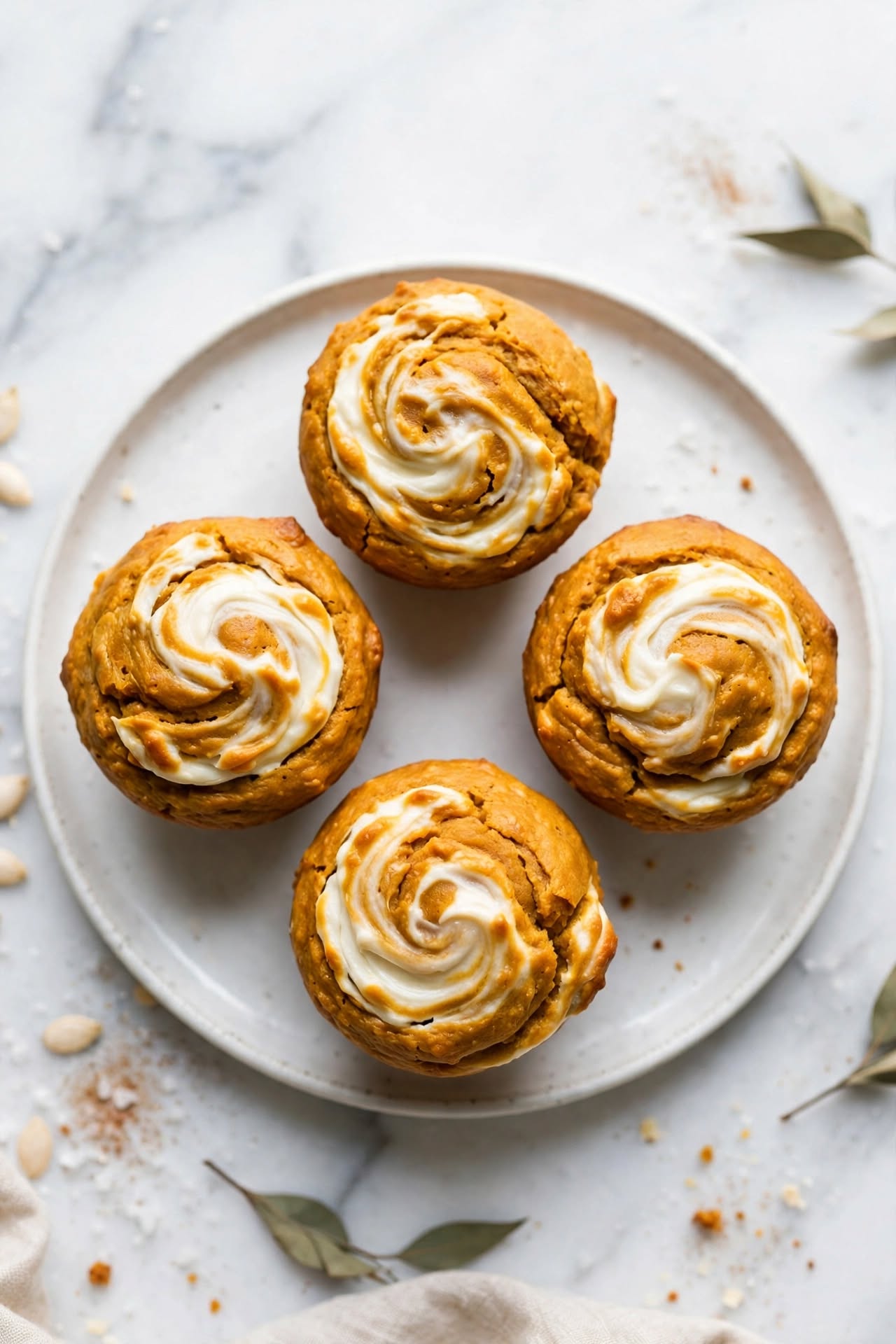

Pumpkin Cream Cheese Muffins
Ingredients
Method
- Prep: Preheat oven to 375°F (190°C). Line a standard 12-cup muffin tin with paper liners.
- Make the filling: Beat softened cream cheese, powdered sugar, and vanilla with a hand mixer on medium speed until completely smooth, about 60 seconds. Set aside.
- Mix dry ingredients: In a large bowl, whisk together flour, brown sugar, baking powder, baking soda, pumpkin pie spice, and salt until no lumps remain.
- Add wet ingredients: Add pumpkin purée, oil, eggs, and vanilla to the dry bowl. Fold with a rubber spatula just until no flour streaks remain. Do not overmix.
- Layer: Add 1 heaping tablespoon of batter to each liner. Place a rounded teaspoon of cream cheese filling in the center. Cover with remaining batter until each cup is two-thirds full.
- Bake: Bake for 20 to 22 minutes, until a toothpick inserted into the pumpkin crumb comes out clean. Cool for 5 minutes in the pan, then transfer to a wire rack.
Notes
- Cream cheese must be fully softened before beating — cold cream cheese will not smooth out.
- Do not open the oven in the first 15 minutes of baking.
- Test doneness with a toothpick in the crumb, not the cream cheese center.
- For mini muffins: use a 24-cup mini tin and bake for 12 to 14 minutes.
- These taste best the day after baking once the spices have had time to develop.
Calculated with a nutrition calculator. Values are approximate and will vary based on specific brands used.
More Fall Baking Recipes You Will Love
If these muffins hit the spot, here are four more recipes worth making next — each one uses a similar skill set and seasonal flavor profile.
- Pumpkin Spice Loaf — The full-loaf version of this flavor profile with a brown sugar crust and a deeply spiced crumb. Slice it for breakfast or wrap it whole as a gift.
- Cinnamon Apple Muffins — The same muffin base method applied to a cinnamon-spiced apple filling — a good recipe to make once autumn apples arrive.
- Cream Cheese Banana Muffins — The same cream cheese layering technique applied to a banana batter. A strong choice for using up ripe bananas.
- Brown Butter Pecan Cookies — A cookie for when you want the fall flavor theme without turning the oven on for muffins again.
Did you make these pumpkin cream cheese muffins? Leave a ⭐⭐⭐⭐⭐ rating below and let me know in the comments how it turned out. I read every comment and would love to know what worked for you.