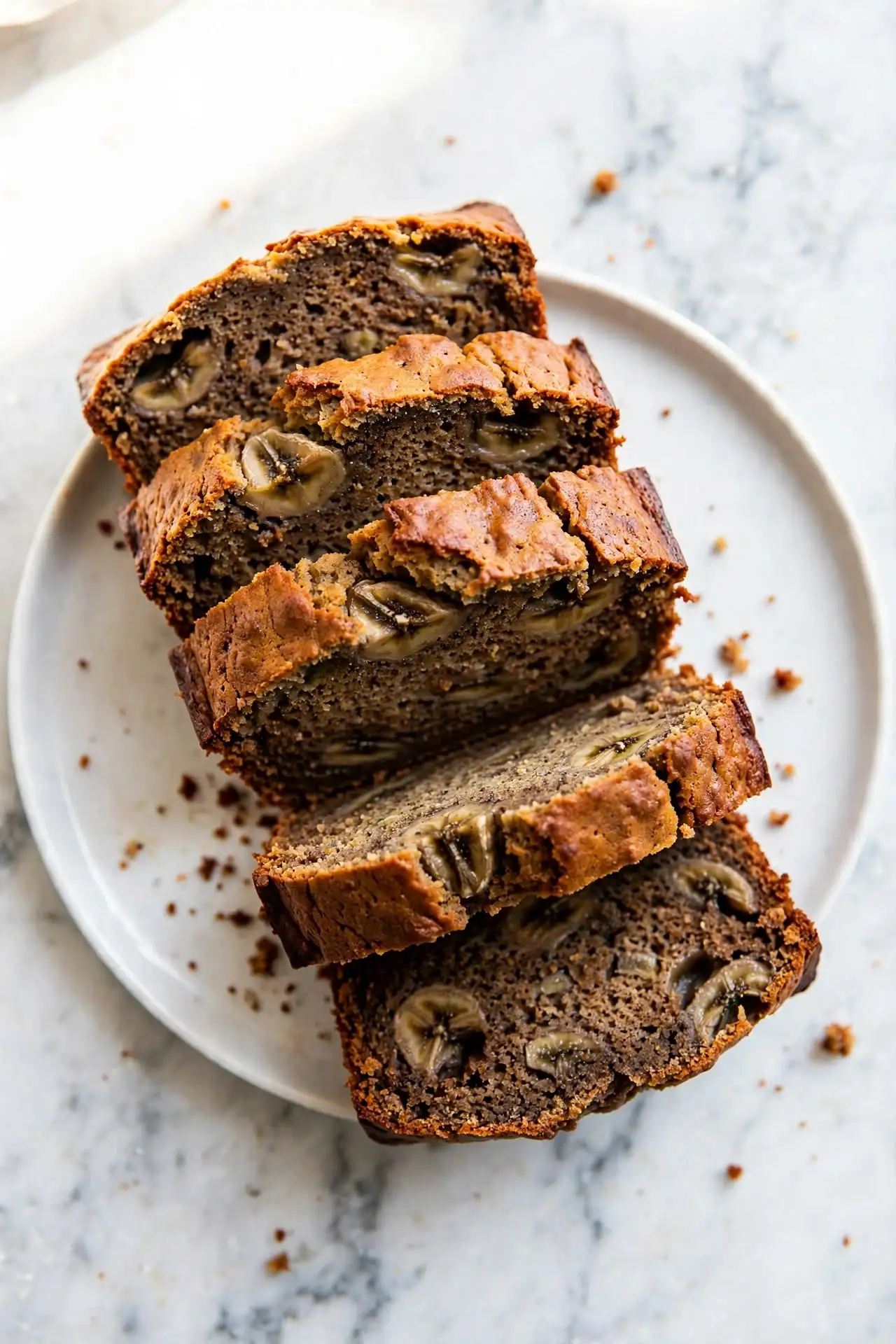
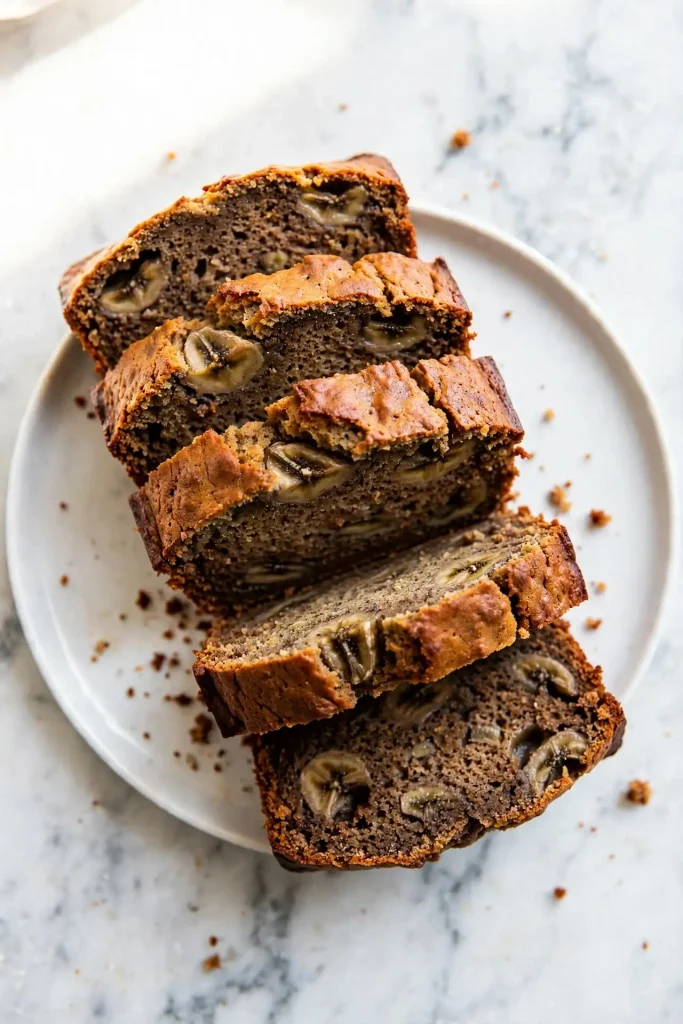
What is banana banana bread? Banana banana bread is a doubled-down version of classic banana bread — it uses five fully overripe bananas instead of the standard two or three, producing a loaf that is noticeably darker, denser in banana flavor, and stays moist for four full days without drying out. It takes under 15 minutes of prep and one bowl to make. Best for anyone who has a pile of brown bananas and wants a result that actually tastes like banana.
This recipe uses five overripe bananas — more than most recipes dare to call for. The result is a loaf with a deep banana flavor that runs through every slice. No mixer. One bowl. The batter comes together in under 15 minutes.
If you have ever baked banana bread that came out tasteless, pale, or dry, the problem was almost certainly the bananas — not enough of them, and not ripe enough. This recipe fixes both.
Jump to :
Why This Recipe Works
There are dozens of banana bread recipes online. Most of them use two to three bananas. This one uses five — and that single decision changes everything about the outcome.
Five bananas instead of three — the extra fruit adds natural sugar, liquid, and starch that keeps the crumb moist for days after baking, not just the day it comes out of the oven.
Brown sugar over white — brown sugar’s molasses content binds moisture into the crumb. Switch to white sugar and your loaf will taste noticeably drier by day two.
No mixer required — over-beating the batter develops gluten and makes the crumb tight and rubbery. A fork and a bowl are all you need, and they give you a better result.
Melted butter, not creamed — melted butter coats the flour strands evenly without trapping air. This gives you a dense, moist, bakery-style crumb rather than a cakey texture.
One bowl, start to finish — fewer tools means less temptation to overwork the batter.
Ingredients for Banana Banana Bread
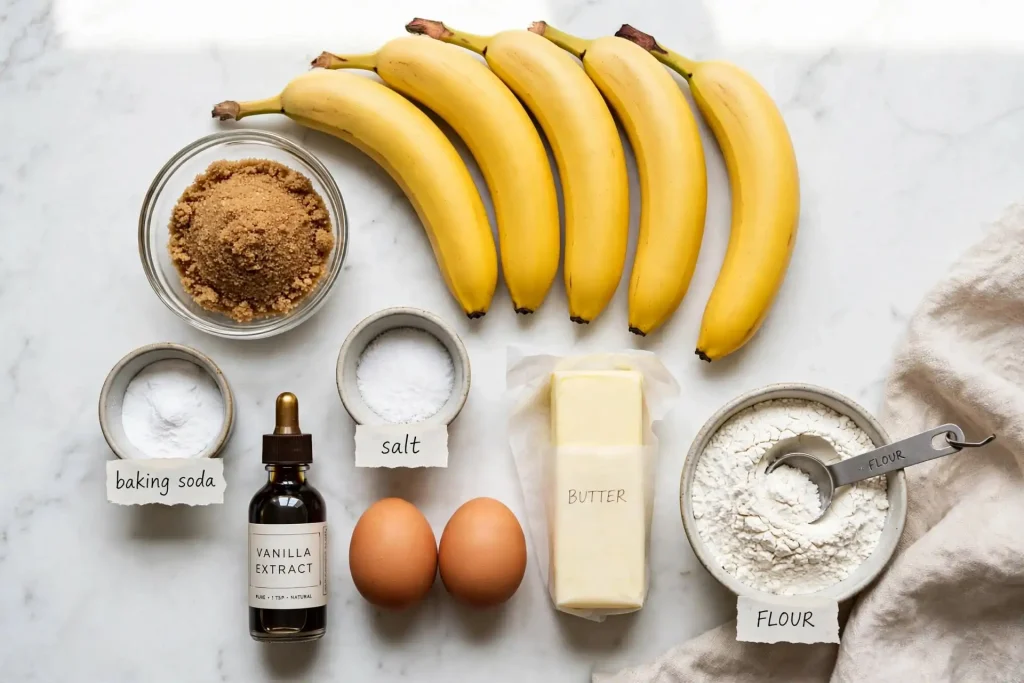
Every ingredient here has a specific job. Here is what each one does — and what to use if you need to make a substitution.
The Loaf
| Ingredient | Amount | What It Does | Best Substitute + Impact |
|---|---|---|---|
| Very ripe bananas | 5 large (~480g mashed) | Moisture, sweetness, flavor, binding | No real substitute — this IS the recipe |
| Unsalted butter, melted | 75g (⅓ cup) | Fat, tenderness, flavor | Coconut oil — gives slight coconut note |
| Brown sugar, packed | 150g (¾ cup) | Sweetness + moisture retention | White sugar — loaf dries out faster |
| Eggs | 2 large, room temp | Structure, lift, binding | 2 flax eggs for vegan version |
| Vanilla extract | 1 tsp | Rounds out banana flavor | Skip if unavailable — minimal impact |
| All-purpose flour | 210g (1¾ cups) | Structure | 1:1 gluten-free blend works |
| Baking soda | 1 tsp | Rise | Not baking powder — different chemistry |
| Salt | ½ tsp | Sharpens all other flavors | Do not skip — bland without it |
| Cinnamon (optional) | 1 tsp | Warm background note | Skip for pure banana flavor |
Key Ingredient Notes
Bananas: They must be fully black or deeply brown-spotted — not yellow, not slightly brown. A barely ripe banana has significantly less natural sugar than a fully black one. If your bananas are still yellow, leave them on the counter for 3 to 5 more days. In a hurry: bake unpeeled bananas at 150°C/300°F for 15 minutes — the skins will turn black and the flesh will be perfectly soft and sweet.
Butter: Melt it and let it cool to room temperature before mixing in — hot butter added directly to the eggs will partially scramble them. You want it fully liquid but not warm to the touch.
Eggs: Room temperature eggs blend more evenly than cold ones. Cold eggs can cause the melted butter to seize into small lumps in the batter.
Equipment You Need
The Banana Ripeness Guide
Banana ripeness is the single biggest factor in how your banana banana bread turns out. The same recipe with yellow bananas versus black bananas produces two completely different loaves.
| Ripeness Stage | What It Looks Like | Sugar Content | Use for This Recipe? |
|---|---|---|---|
| Yellow, firm | No spots, holds its shape | Low | No — not sweet or moist enough |
| Yellow with small spots | Few spots, still firm | Medium | No — pale, less flavorful loaf |
| Mostly brown, soft | Heavily spotted, peels easily | High | Acceptable — use 6 to compensate |
| Fully black, very soft | Completely black, almost liquid inside | Very high | Best — 5 gives ideal result |
| Frozen and thawed | Black, liquid pooled at base | Very high | Excellent — drain liquid before use |
Visual cue for ideal ripeness: The peel should be almost entirely black. Pressing the banana through the peel should feel completely soft — no firm spots anywhere. The smell should be strong and sweet, not fermented.
Workaround for under-ripe bananas: Place unpeeled bananas on a baking sheet and bake at 150°C/300°F for 15 to 20 minutes until skins turn fully black. Cool completely before mashing.
How to Make Banana Banana Bread — Step by Step
Follow these steps in order. The most important rule: stop mixing the moment the flour disappears.
Preheat the Oven and Prepare Your Pan
Set your oven to 175°C/350°F. Grease a 23 × 13cm (9 × 5 inch) loaf pan with butter or cooking spray, then line with parchment paper leaving 5cm overhang on both long sides. This overhang is your handle for lifting the loaf out cleanly without cracking the top.
What to look for: Parchment lying flat against the pan walls, with even overhang on both sides.[cite: 9]
Mash the Bananas
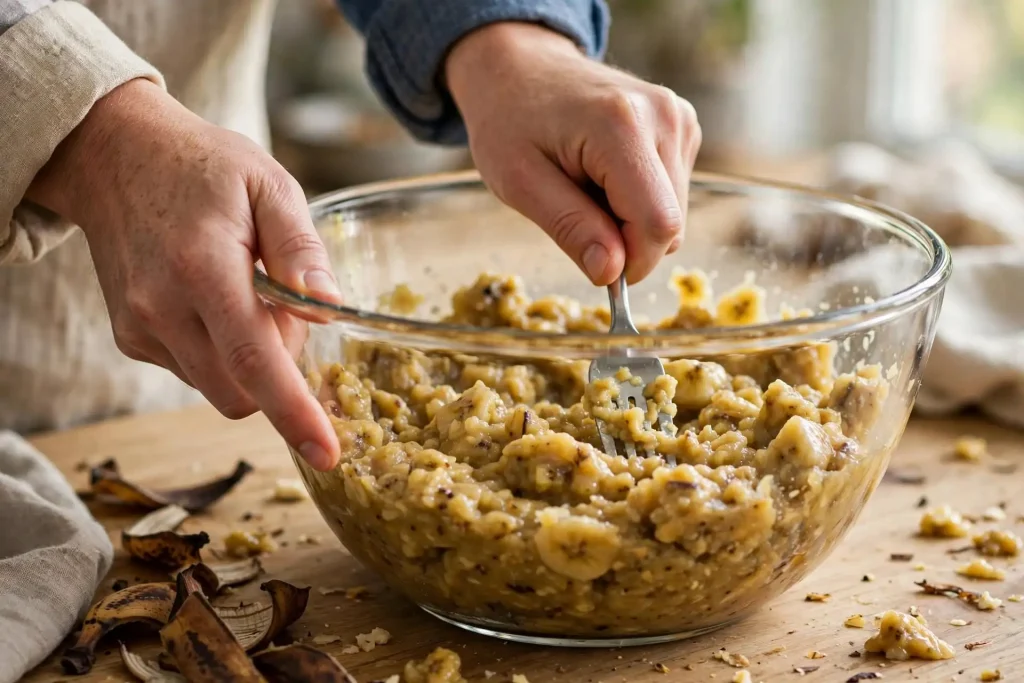
Peel all five bananas into a large mixing bowl. Mash with a fork until mostly smooth — small chunks are fine and actually add texture to the final loaf. Do not use a blender or food processor: over-processing turns the bananas watery and produces a gummy center that never fully sets[cite: 9].
If using frozen-thawed bananas: A small amount of pooling liquid is normal — stir it back in. If there is a large amount (more than 2 to 3 tablespoons), pour off the excess before continuing[cite: 9].
What to look for: A thick, paste-like mash.[cite: 9]
Add the Wet Ingredients
Add the melted and cooled butter, brown sugar, eggs, and vanilla to the mashed bananas. Stir with the fork until fully combined — about 20 strokes. The mixture will look slightly curdled at this stage. That is normal and smooths out once the flour goes in[cite: 10].
What to look for: No visible streaks of egg white and no butter pooling at the base of the bowl.[cite: 10]
Add the Dry Ingredients
Sprinkle the flour, baking soda, salt, and cinnamon directly over the wet mixture. Fold with a spatula or fork using 12 to 15 slow strokes, scraping the bottom of the bowl each time. Stop the moment you see no more flour streaks. Ten extra folds is enough to develop gluten and turn a tender crumb into something dense and chewy[cite: 10].
What to look for: A thick, lumpy batter with no white flour patches. It should fall off the spatula in slow, heavy ribbons — not pour like pancake batter.[cite: 10]
Pour and Bake
Pour the batter into the prepared loaf pan and smooth the top with the back of a spoon. Optional: run a sharp knife down the center of the batter to guide an even crack. Bake on the center rack at 175°C/350°F for 60 to 70 minutes[cite: 11].
What to look for: A deep golden-brown crust and a clean toothpick at the 60-minute mark. If the top is browning fast after 45 minutes, lay foil loosely over the top and continue baking.[cite: 11]
Cool Before Slicing
Remove from the oven and cool in the pan for 10 minutes. Lift out using the parchment overhang and transfer to a wire rack. Wait at least 30 minutes before slicing. Cutting into a hot loaf collapses the steam structure inside — you get a gummy, wet center even if the toothpick came out perfectly clean[cite: 11].
What to look for: The loaf should feel firm through the parchment. The crack down the center top is normal and a good sign.[cite: 11]
The Science Behind a Perfect Loaf
A great result is not luck — it is five ingredients doing specific, predictable jobs.
Why Overripe Bananas Make the Difference
As bananas ripen, their starch converts to fructose and glucose — simple sugars that are hygroscopic, meaning they attract and hold water molecules. This is why a loaf made with fully black bananas stays moist on day four while one made with yellow bananas is already dry by day two.
Why Baking Soda, Not Baking Powder
Bananas are slightly acidic. Baking soda needs an acid to activate — it reacts with the banana’s natural acids to release carbon dioxide bubbles that make the loaf rise. Baking powder contains its own acid and does not react as effectively with banana acidity — the rise tends to be weaker and the flavor can be slightly off.
Why Melted Butter, Not Creamed
Creaming butter traps air — that air is what makes cakes light and cakey. For banana bread, you want the opposite: a dense, moist, tight crumb. Melted butter skips the air-trapping step entirely. The result tastes like real bakery banana bread, not a banana-flavored cake.
Why Brown Sugar Over White
The molasses in brown sugar is hygroscopic — it actively pulls moisture from the surrounding air and holds it inside the crumb. This is what keeps the loaf soft at room temperature for days. White sugar does not do this. The only thing that overrides brown sugar’s moisture retention is overbaking — so pull the loaf as soon as the toothpick is clean.
Tips for the Best Result
These are the details that separate a good banana banana bread from one people ask you to make again.
Let Your Butter Cool After Melting
Melt the butter, then let it sit until it no longer feels warm to the touch. Warm butter partially cooks the eggs on contact — you get a slightly grainy, scrambled batter instead of a smooth one. Two minutes of patience here makes a visible difference.
Use a Metal Pan, Not Glass
Glass conducts heat more slowly and unevenly. Metal pans deliver the deep brown crust and fully-baked center this recipe needs. If you only have a glass pan, add 10 minutes to the baking time and check with a toothpick at 70 minutes instead of 60.
Do Not Open the Oven Before 50 Minutes
The loaf needs a steady temperature to set its internal structure. Opening the oven door early drops the temperature suddenly and can cause the center to sink — even if the outside looks fine. Set a timer and leave it alone.
Freeze Brown Bananas for Later
When bananas are just turning brown but you are not ready to bake, freeze them with the peel on. When you are ready, thaw them in a bowl — they will be perfectly soft and intensely sweet. A small amount of pooling liquid is normal — stir it back in. If there is a large amount of excess liquid (more than 2 to 3 tablespoons), pour off the extra before mixing.
Score the Top Before Baking
Before the pan goes in the oven, run a sharp knife down the center of the batter in one clean line. This guides the crack so it opens evenly down the middle — instead of splitting randomly on the side or cracking unevenly.
Test at 60 Minutes — A Clean Toothpick Is Your Signal
Start checking at 60 minutes by inserting a toothpick into the very center. When it comes out clean or with just a few moist crumbs — no wet batter — that is your signal to stop. The loaf continues to set from residual heat after it comes out, so pulling it at first clean toothpick is the right call rather than waiting for it to feel “more done” in the oven.
Doubling the Recipe
Use two separate loaf pans — not one large pan. A double batch in a single pan will not cook through to the center before the outside overcooks. Two standard pans on the same oven rack bake at the same time with no adjustments needed.
Common Mistakes to Avoid
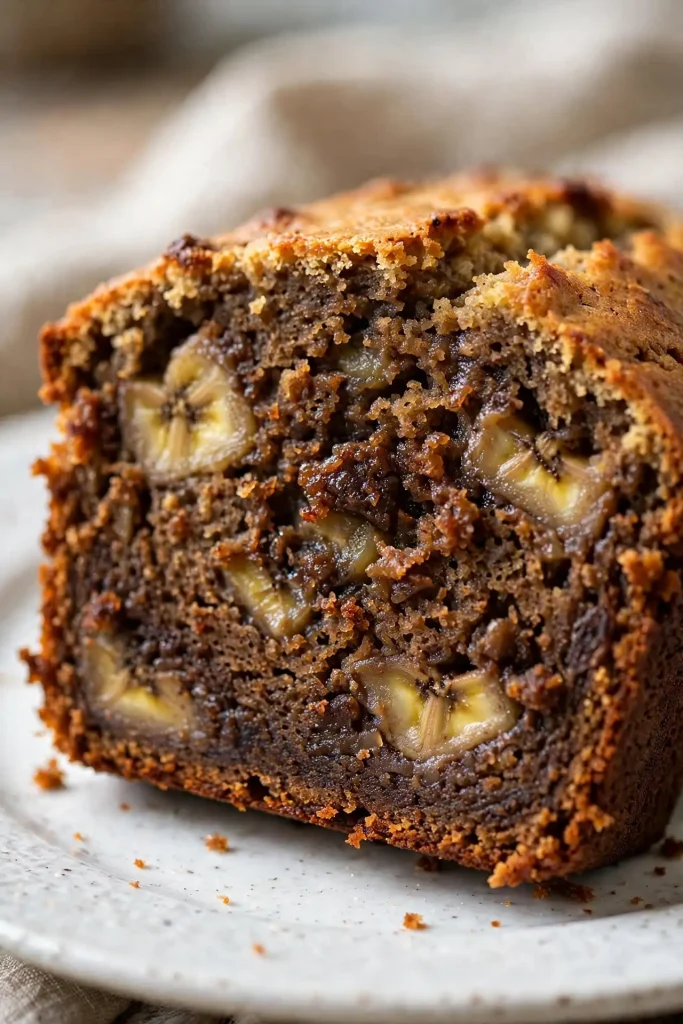
❌ Using Bananas That Are Not Ripe Enough
Result: Your loaf will come out pale, bland, and noticeably less moist — the flavor will taste more of flour than banana.
Fix: Aim for heavily brown-spotted or fully black bananas. If yours are still yellow or lightly spotted, give them a few more days on the counter, or use the oven-ripening method described in the Ripeness Guide above.
❌ Overmixing After the Flour Goes In
Result: A tough, chewy, rubbery crumb instead of the soft, tender texture the recipe is built to produce.
Fix: Fold 12 to 15 times with a spatula. Stop the second you see no more white flour streaks. Lumps in the batter are fine — they bake out.
❌ Not Draining Frozen-Thawed Bananas
Result: Excess liquid makes the batter too wet, producing a dense gummy center that never bakes through even after 75 minutes.
Fix: After thawing, mash the banana flesh in the bowl and pour off any liquid that collects before adding the other ingredients.
❌ Slicing the Loaf While It Is Still Hot
Result: The steam inside is still working to finish the crumb structure. Cutting in early collapses it — you get a wet, gummy center even if the toothpick came out clean in the oven.
Fix: Cool in the pan 10 minutes, then on the wire rack at least 30 more. The wait is the last step in the recipe.
❌ Using a Pan That Is Too Small
Result: The batter overflows, or the loaf rises unevenly and collapses in the center.
Fix: Use a standard 23 × 13cm (9 × 5 inch) loaf pan for this five-banana recipe. A smaller 8 × 4 inch pan cannot hold this volume.
❌ Running the Oven at the Wrong Temperature
Result: Too high — the outside burns before the center cooks through. Too low — the loaf bakes pale and the crust never develops its deep color.
Fix: Use an oven thermometer. Most home ovens run 10 to 20 degrees off from the dial. Bake at a true 175°C/350°F.
❌ Using Baking Powder Instead of Baking Soda
Result: The loaf does not rise as well, the crumb is denser than it should be, and there is a faint chemical aftertaste.
Fix: Baking soda only — it is not interchangeable with baking powder in this recipe because the chemistry is different.
For more baking guides like this one, Pumpkin Desserts covers everything in the same detail.
Variations Worth Trying
The base recipe is stable enough that any of these changes can be made without affecting the core technique or bake time.
🍫 Chocolate Chip Banana Banana Bread
What changes: Fold 150g (1 cup) semi-sweet chocolate chips into the batter after Step 4, right before pouring into the pan.
Result: Chips stay in clusters rather than sinking — a properly thick batter holds them in place. For extra depth, use dark chocolate chips (70% cocoa).
🌰 Walnut Banana Banana Bread
What changes: Fold 100g (¾ cup) roughly chopped walnuts into the batter after Step 4. Press a few whole halves on top before baking.
Result: The walnuts add a slight bitterness that cuts through the sweetness and gives the loaf a more complex, bakery-style character.
🌱 Vegan Banana Banana Bread
What changes: Replace the 2 eggs with 2 flax eggs (2 tbsp ground flaxseed + 6 tbsp water, rested 10 minutes). Replace butter with the same amount of melted coconut oil.
Result: Slightly denser crumb but still moist and tender. The flavor is clean — coconut oil adds a subtle background note that works well with banana.
🧁 Banana Banana Bread Muffins
What changes: Same batter, divided into a lined 12-cup muffin tin. Reduce bake time to 22 to 25 minutes at the same temperature.
Result: Individual portions ideal for lunchboxes or freezing one at a time. Same moist crumb as the loaf, just in a more portable shape.
✨ Brown Butter Banana Banana Bread (Elevated Version)
What changes: Instead of simply melting the butter, cook it in a small saucepan over medium heat for 4 to 5 minutes until golden and nutty-smelling. Cool completely before using in the batter.
Result: The browned butter adds a deep caramel-nutty note that makes this version suitable for gifting, dinner parties, or any time you want something that feels more considered than standard banana bread.
How to Store Banana Banana Bread
Note: The durations below refer to best quality. Properly stored banana bread is generally safe beyond these windows, but taste and texture will decline. If it smells off or shows mold, discard it.
Room Temperature — 3 days
Wrap tightly in plastic wrap or beeswax wrap, or store sliced in an airtight container with a paper towel on top to absorb condensation. Keep away from direct sunlight. Do not refrigerate if eating within 3 days — the fridge dries out the crumb faster than leaving it on the counter.
Refrigerator — 5 to 6 days
Store in an airtight container.
The crumb may feel denser and drier when cold.
Before eating a refrigerated slice, microwave for 15 to 20 seconds —
this restores the softness by warming the crumb back to room temperature.
Freezer — up to 3 monthsSlices: wrap individually in plastic wrap, then freeze in a labeled zip bag. Whole loaf: two layers of plastic wrap, then foil.
Thaw individual slices at room temp 30–45 min, or microwave 30 sec.
Do not microwave a whole loaf — it heats unevenly.
If batch baking is something you enjoy, Pumpkin Cake is another recipe that fits perfectly into that routine.
How to Serve Banana Banana Bread
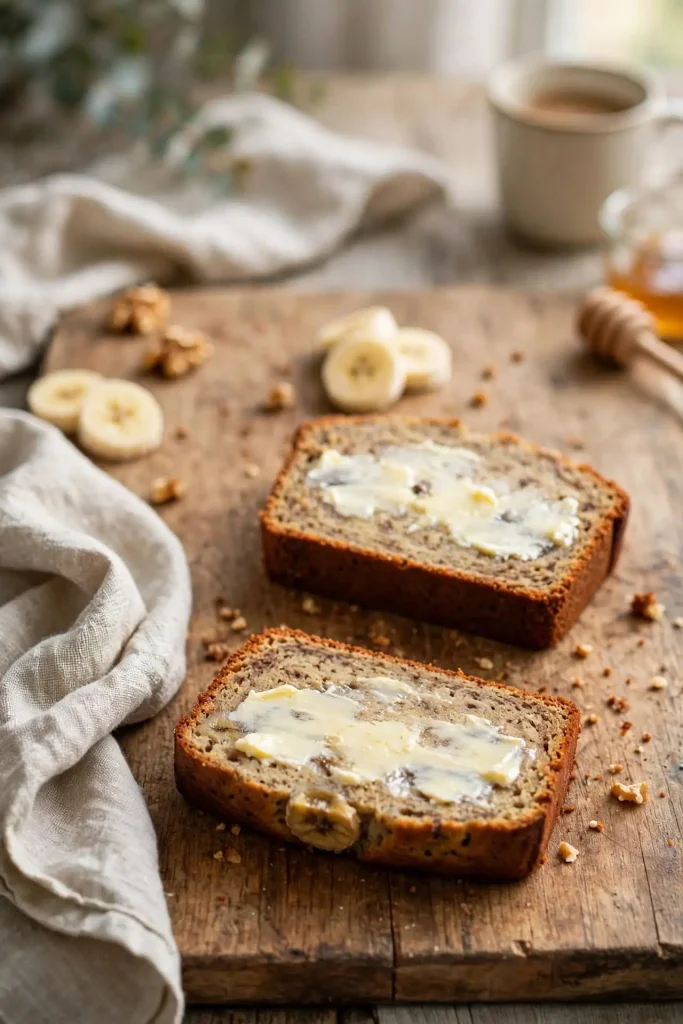
Classic Ways to Serve
- Sliced thick and eaten at room temperature — no additions needed[cite: 15]
- Toasted in a pan with a little butter until golden on both sides[cite: 15]
- Warmed briefly in the microwave and served with a drizzle of honey[cite: 15]
Upgraded and Occasion-Worthy
- Toasted and spread with cream cheese, topped with thin banana slices — works as a fast weekend breakfast or a brunch side[cite: 15]
- Served warm with a scoop of vanilla ice cream — the contrast of warm loaf and cold ice cream is better than it sounds[cite: 15]
- Sliced, individually wrapped, and placed in gift bags or lunchboxes — the brown butter variation is especially suited to gifting[cite: 15]
Frequently Asked Questions
Can I Make Banana Banana Bread With Fewer Than Five Bananas?
Yes, but the result will be less moist and less intensely flavored. With three bananas you get a standard banana bread — still good, but not the same depth of flavor that makes this recipe distinct. If you only have four, use them and add an extra tablespoon of brown sugar to compensate for the reduced natural sweetness.
Why Did My Banana Banana Bread Come Out Gummy in the Middle?
A gummy center happens for one of three reasons: underbaking, batter that was too wet from improperly drained frozen bananas, or slicing the loaf before it fully cooled. Test with a toothpick at 60 minutes — if it comes out wet, add 10 more minutes. Always cool for at least 30 minutes before slicing.
How Do I Know When Banana Banana Bread Is Done?
Insert a toothpick into the very center of the loaf — it should come out clean or with a few moist crumbs attached, never with wet batter. The crust should be deep golden-brown. If the top is browning faster than the center is setting, tent foil loosely over the top and continue baking.
Can I Make Banana Banana Bread Ahead of Time?
Yes — it actually tastes better on day two than day one. The flavors deepen overnight as the banana moisture distributes evenly through the crumb. Bake the day before you need it, cool completely, wrap tightly, and leave at room temperature overnight.
How Long Does Banana Banana Bread Last?
At room temperature: 3 days, tightly wrapped. In the refrigerator: up to 6 days in an airtight container. In the freezer: up to 3 months, whether stored as individually wrapped slices or as a whole loaf in foil.
Can I Freeze Banana Banana Bread?
Yes — it freezes better than most loaves. Slice first, wrap each slice in plastic wrap individually, then freeze in a labeled bag. Thaw at room temperature for 30 to 45 minutes or microwave for 30 seconds. The texture after thawing is nearly identical to fresh.
What Can I Substitute for Butter in This Recipe?
Melted coconut oil is the best direct substitute — use the same amount. It adds a subtle coconut background note. Neutral oils like vegetable or canola oil also work, but produce a slightly less rich flavor. Do not substitute olive oil — the flavor is too assertive for this recipe.
Can I Double This Banana Banana Bread Recipe?
Yes, but use two separate loaf pans rather than one large pan. A double batch in a single pan will not cook through before the outside overcooks. Two standard pans on the same oven rack bake simultaneously with no adjustment to time or temperature needed.
Why Did My Banana Banana Bread Sink in the Middle?
Sinking is caused by too much leavening, opening the oven before 50 minutes, or underbaking. Confirm you used one teaspoon of baking soda — not one tablespoon. Do not open the oven door before the 50-minute mark, no matter how good it smells.
What Size Pan Should I Use for Banana Banana Bread?
A standard 23 × 13cm (9 × 5 inch) loaf pan is correct for this five-banana recipe. A smaller 8 × 4 inch pan will overflow with this amount of batter. If you only have a smaller pan, reduce to four bananas and reduce the other ingredients proportionally.
Why Does This Recipe Use Baking Soda Instead of Baking Powder?
Baking soda reacts directly with the natural acids in ripe bananas to produce the carbon dioxide that makes the loaf rise. Baking powder contains its own acid and does not react as effectively with banana acidity — the result is a weaker rise and a faint chemical edge in the flavor. Baking soda is not optional here.
Can I Add Nuts or Chocolate Chips to Banana Banana Bread?
Yes — fold in up to 150g of any mix-in after the flour is incorporated. Toss them in a teaspoon of flour before adding to stop them from sinking to the bottom during baking. More than 150g makes the batter too heavy to hold the mix-ins in place.
If you enjoyed this recipe, Pumpkin Cream Cheese Muffins is the next one worth making.

Banana Banana Bread
Ingredients
Method
- Preheat oven to 175°C (350°F). Grease a 23 × 13cm (9 × 5 inch) loaf pan and line with parchment, leaving overhang on both long sides.
- Mash bananas. Peel all five into a large bowl. Mash thoroughly with a fork until mostly smooth — small chunks are fine. Drain any pooled liquid if bananas were frozen-thawed.
- Add wet ingredients. Add the cooled melted butter, brown sugar, eggs, and vanilla. Stir until no streaks of egg remain — about 20 strokes.
- Add dry ingredients. Sprinkle flour, baking soda, salt, and cinnamon over the wet mixture. Fold with a spatula using 12 to 15 strokes. Stop the moment no flour streaks remain. Do not overmix.
- Pour and score. Pour batter into the prepared pan. Smooth the top. Optional: score a line down the center with a sharp knife.
- Bake 60 to 70 minutes. At 45 minutes, check — cover loosely with foil if browning too fast. Test at 60 minutes with a toothpick; done when it comes out clean or with moist crumbs only.
- Cool completely. Cool in the pan 10 minutes. Lift out using the parchment and transfer to a wire rack. Cool at least 30 minutes before slicing.
Notes
- Banana ripeness is non-negotiable. Fully black or heavily spotted only.
- Stop folding the moment flour disappears. Over-mixing = tough crumb.
- Do not slice hot — the crumb is still setting for 30 minutes after baking.
- Brown butter version: cook butter until golden and nutty before cooling.
- Storage: room temperature 3 days / refrigerator 6 days / freezer 3 months.
- Contains: Gluten, Eggs, Dairy. | Dairy-free: swap butter for melted coconut oil. | Egg-free: use 2 flax eggs (2 tbsp ground flaxseed + 6 tbsp water, rest 10 min). | Gluten-free: use a 1:1 GF flour blend.
More Baking Recipes You Will Love
Did you make this banana banana bread?
Leave a ⭐⭐⭐⭐⭐ rating below and tell me how it turned out.
I read every comment — let me know what worked for you.